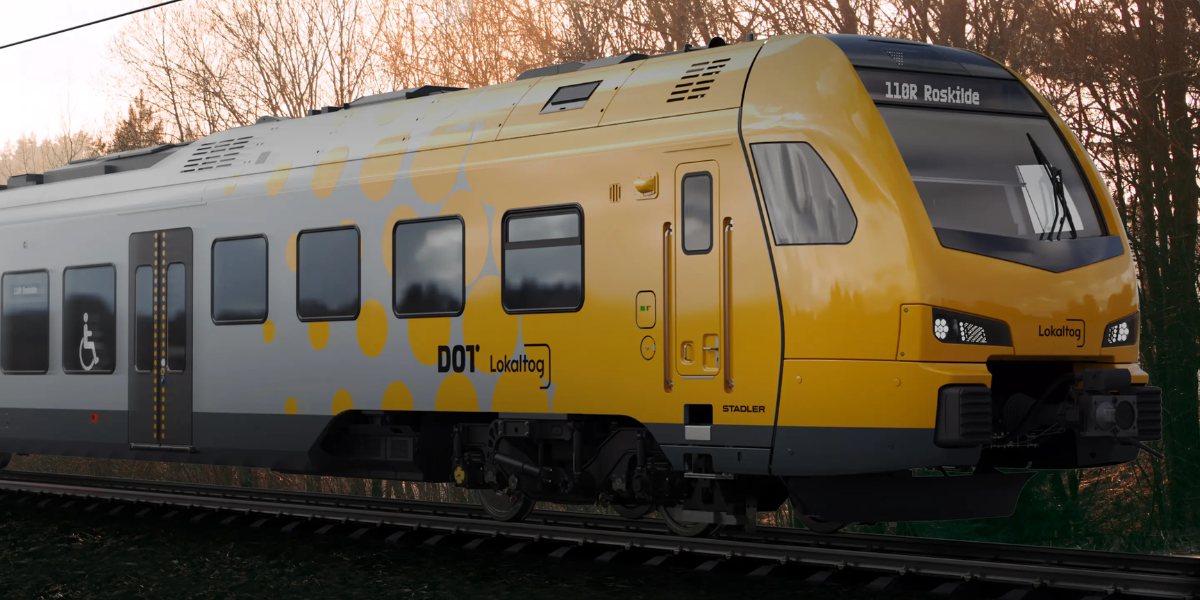
Stadler has received a follow-up order from Lokaltog A/S for ten additional FLIRT Akku battery-powered trains, exercising an option from the original contract signed in October 2024.
The new trains are scheduled to enter service in the first half of 2029, gradually replacing the aging IC2 fleet currently operating on regional routes across Region Zealand, Denmark.
According to Lars Wrist-Elkjær, CEO of Lokaltog, the investment marks a significant step forward:
“I am very pleased with Region Zealand’s decision to acquire more trains. These battery-powered units are vital to Lokaltog’s contribution to the green transition while also ensuring greater operational reliability.”
Stadler’s FLIRT Akku is a proven solution in sustainable rail transport. The trains can run up to 100 kilometres solely on battery power, recharging either under overhead catenary systems** or through regenerative braking. Notably, in 2021 a FLIRT Akku set a Guinness World Record, covering 224 kilometres on a single battery charge.
The design also emphasises accessibility and passenger comfort. Each unit complies with European TSI PRM standards and features:
* **Low-floor entrances** with wide doors and automatic gap bridges
* **Dedicated spaces** for wheelchairs and bicycles
* **Semi-automatic boarding ramps** for wheelchair users
* **Air conditioning and Wi-Fi** throughout
* **Passenger information displays**
* **Universal-access toilets**
With this latest order, **Stadler will supply a total of 24 FLIRT Akku trains to Lokaltog**, further expanding Denmark’s fleet of modern, emission-free regional trains.
Radosław Banach, CEO of Stadler’s Polish production site in Siedlce, commented:
“This additional order demonstrates the success of the FLIRT Akku, a zero-emission solution that combines environmental responsibility with high passenger comfort. We are proud to strengthen our partnership with Lokaltog and to support their commitment to greener mobility.”
The expansion of the fleet underscores Denmark’s dedication to sustainable regional transport, reducing reliance on diesel-powered trains while enhancing service quality for passengers.