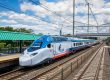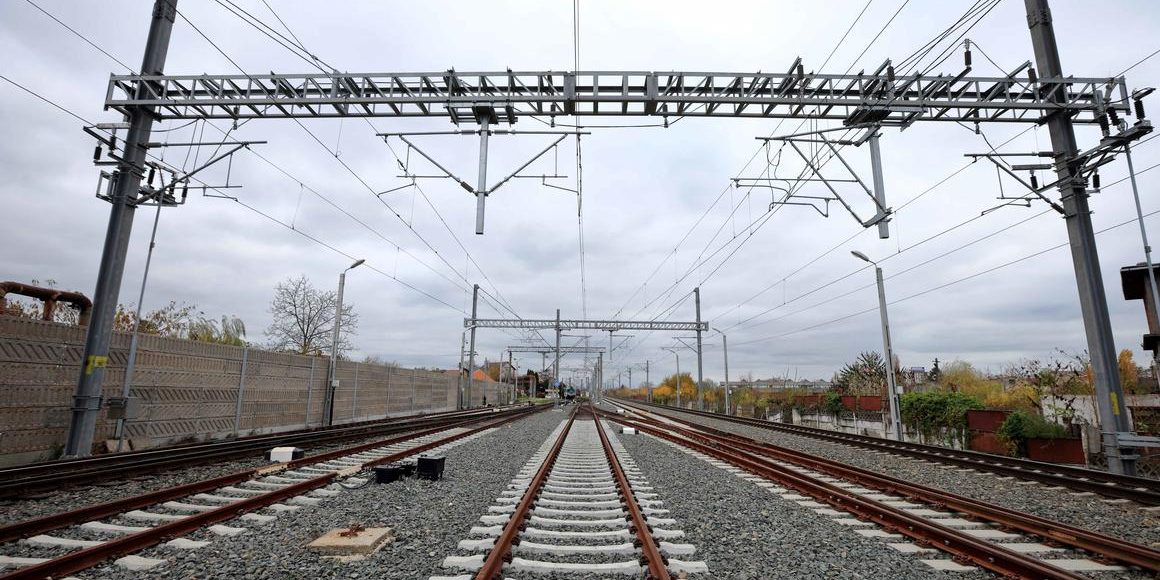
Alstom, together with Romanian construction company Arcada, has secured a major contract to modernise the second section of the Bucharest–Giurgiu railway line. The project includes full **electrification of the route** and the implementation of European Rail Traffic Management System (ERTMS) Level 2.
The works will be carried out by the Asocierea RailWorks consortium, formed by Alstom and Arcada, with Arcada acting as the lead partner.
Valued at approximately 450 million euros, the contract allocates nearly one-quarter of the total sum to Alstom. The modernisation covers 93.45 kilometres of single-track railway connecting Bucharest North, Jilava, Giurgiu North, and the Giurgiu border. This route is historically significant as part of **Romania’s first railway line**, originally inaugurated in 1869.
As part of the project, Alstom will be responsible for electrification, ERTMS Level 2 signalling, and digital train control systems, including power supply and overhead lines. Meanwhile, Arcada will oversee civil engineering works, infrastructure upgrades, and track improvements.
Once completed, the modernised line will allow passenger trains to operate at speeds of up to 160 km/h, significantly improving travel times and service quality.
Gabriel Stanciu, Alstom’s Managing Director for Romania, Bulgaria, and the Republic of Moldova, stated:
“This new contract reinforces Alstom’s leading role in Romania’s railway market in both signalling and electrification. Revitalising such a historic line represents a major milestone and showcases the expertise of our 230-strong team of highly qualified engineers supporting both local and international projects.”
The Bucharest–Giurgiu North Border line forms part of the Rhine–Danube Pan-European Corridor, connecting Romania with Bulgaria via the Friendship Bridge across the Danube. This project specifically covers the section up to the approach of the bridge.
The contract spans 36 months and includes both design and execution phases. Beyond modernisation, it marks a significant step toward strengthening regional connectivity and integration within the European railway network.